
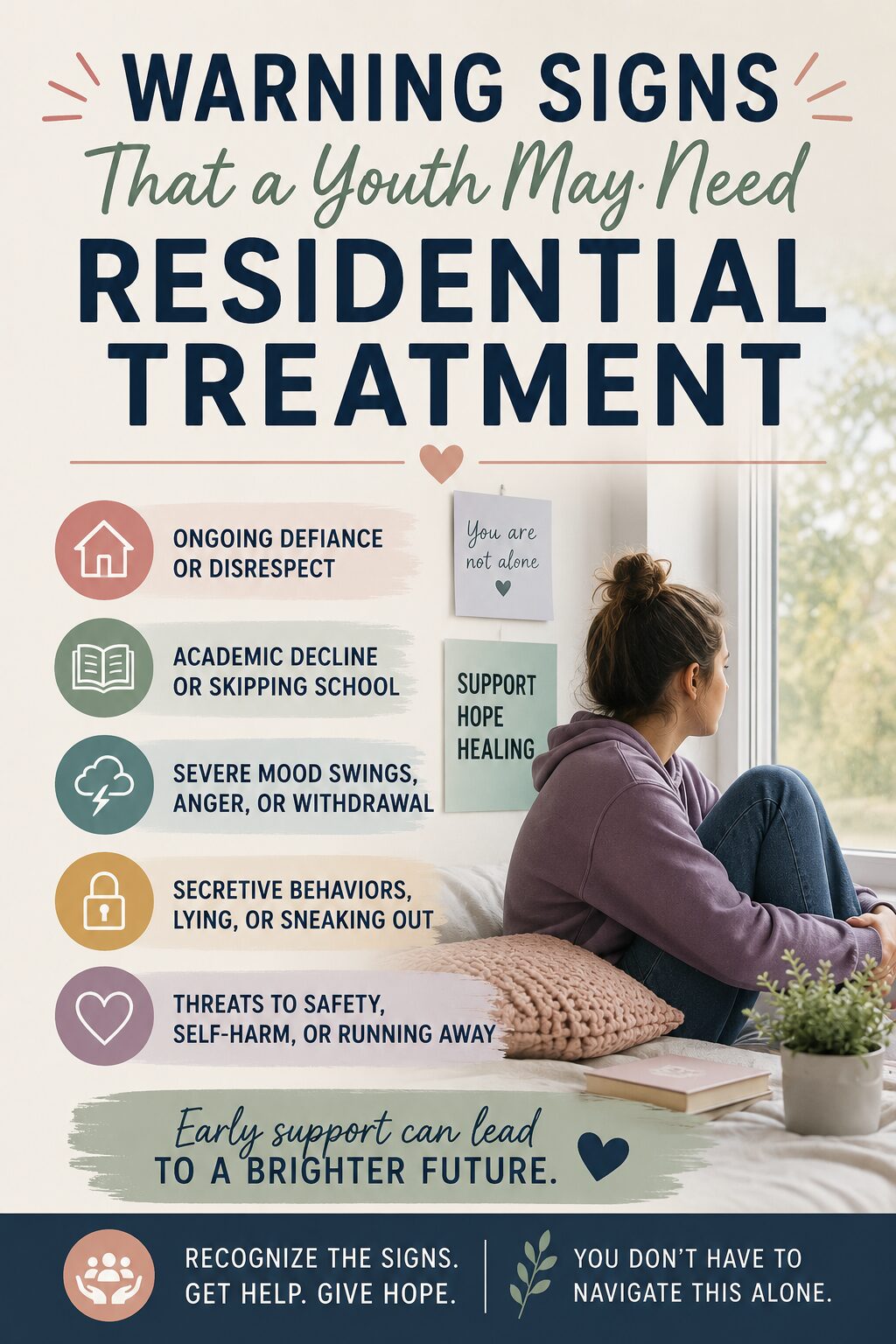
Raising a teenager comes with many challenges. Most parents face difficult moments as their child grows and tests boundaries. However, some behaviors go beyond typical teenage struggles and may signal a need for professional help.
.jpg)
Knowing when a young person needs more support than what is available at home can help families get the right care at the right time. Residential treatment provides intensive therapy and structure for teens facing serious mental health or behavioral issues. This type of care becomes necessary when a youth’s struggles create safety concerns or when other forms of treatment have not worked.
Certain warning signs can help parents and caregivers recognize when residential treatment might be appropriate. These signs often appear across different areas of a teen’s life, from home and school to their relationships and personal safety.
Persistent refusal to follow rules, causing stress or fear at home
Most children push back against rules sometimes, and that is a normal part of growing up. But when a young person constantly refuses to follow household rules, it can create serious problems for the whole family. In some cases, families may start with outpatient therapy, family counselling, or behavioral support programs before looking at a higher level of care. When those options are not enough, and the behavior stays intense, Avery’s House, boot camp for troubled teens in Phoenix, can become an important next step, especially for families in the area who need structured daily support close to home. Phoenix and the surrounding Maricopa County area have several facilities that specialize in working with defiant youth, making it a practical option for Arizona families who want to stay within a reasonable distance during the treatment process. Similarly structured programs are also available in other parts of the U.S. and the UK, which shows how widely this level of support is used when families need more intensive care. The refusal goes beyond typical teenage rebellion, as these young people argue about every instruction and refuse to comply with basic expectations. Parents often feel they are walking on eggshells in their own homes, while siblings may feel afraid or neglected because so much attention goes to managing the defiant youth.
Significant academic decline, including dropping grades or skipping classes
A sudden drop in grades often signals that a youth needs more support than outpatient services can provide. When a student who previously performed well starts failing classes or missing assignments, it may indicate serious underlying issues.
Skipping classes or being absent from school frequently is another warning sign. These behaviors suggest the youth is avoiding school rather than just struggling with coursework. Missing school can quickly become a pattern that leads to falling further behind.
Academic decline doesn’t always happen slowly. Some teens experience a rapid deterioration in performance that parents and teachers can’t explain through normal challenges. When combined with other warning signs, this decline may point to mental health problems or substance use that requires intensive treatment.
Parents should pay attention when their teen stops caring about schoolwork entirely. A student who once took pride in their grades but now shows complete disinterest may need professional evaluation for residential treatment options.
Severe and frequent mood swings, like anger outbursts or emotional withdrawal
Youth who experience extreme mood swings may show sudden shifts between intense emotions and complete withdrawal. These changes often happen quickly and without clear reasons.
Anger outbursts can include yelling, throwing objects, or physical aggression that seems too big for the situation. The reactions may come on suddenly and feel impossible for the young person to control. These episodes typically cause problems at home, at school, or with friends.
Emotional withdrawal is another warning sign. A young person might suddenly stop talking, isolate themselves in their room, or refuse to participate in activities they once enjoyed. They may appear emotionally numb or disconnected from family and friends.
When these mood swings happen often and disrupt daily life, they may point to a larger mental health concern. The pattern becomes more serious when the youth cannot manage their emotions even with support at home or outpatient care.
Secretive behaviors such as lying, hiding things, or sneaking out
When a youth becomes increasingly secretive, it may signal deeper issues that require professional help. These behaviors often start small but can point to serious problems like substance use or dangerous relationships.
Lying becomes more frequent and elaborate. A young person might make up stories about where they’ve been or who they’re with. They may hide their phone or computer screen when adults come near.
Some youth start sneaking out at night to meet friends or attend parties without permission. They might take the car without asking or break other household rules regularly. Physical items like drugs, alcohol, or stolen goods may be hidden in their room.
Most children lie or keep secrets sometimes as they grow up. But when secretive behavior becomes a pattern across different settings, it suggests something more serious. Parents who notice these ongoing behaviors should consider if their child needs more support than they can provide at home.
Threats to safety, including self-harm or running away
Young people who threaten their own safety need immediate attention. Self-harm behaviors and threats to run away are serious warning signs that a youth may need a higher level of care.
Self-harm includes cutting, burning, or other ways of causing physical injury. These behaviors often signal deep emotional pain. When a young person talks about hurting themselves or shows signs of self-injury, adults should take these warnings seriously.
Running away or threatening to leave home also indicates serious distress. Youth who talk about running away, pack bags, or show increased secrecy may be planning to leave. Changes in behavior, like withdrawing from family or breaking rules, can appear before a runaway attempt.
Both self-harm and running away put young people in danger. These behaviors often happen alongside other mental health concerns like depression or anxiety. Professional help becomes necessary when these safety threats occur.
Conclusion
Recognizing warning signs early can make a significant difference in a teen’s recovery and long-term well-being. Parents who notice persistent behavioral changes, declining mental health, or safety concerns should seek professional guidance to determine the appropriate level of care.
Residential treatment provides structured support for teens whose struggles exceed what outpatient services can address. While the decision to pursue residential care is challenging, it often represents a necessary step toward healing and stability for youth facing severe emotional or behavioral difficulties.
What is residential treatment for teens?
Residential treatment is a structured live-in program that provides therapy, emotional support, education, and supervision for teens facing serious mental health or behavioral challenges.
How do I know if my teen needs residential treatment?
Warning signs can include extreme mood swings, self-harm, aggressive behavior, ongoing defiance, academic decline, substance use, running away, or behaviors that make home life feel unsafe.
Is residential treatment only for teens with severe mental illness?
No. Residential treatment can also help teens struggling with behavioral issues, trauma, anxiety, depression, substance use, or emotional regulation when outpatient therapy is not enough.
What happens during residential treatment?
Teens typically participate in individual therapy, group counseling, family therapy, academic support, and structured daily routines designed to help them build healthy coping skills and emotional stability.
Can parents stay involved during treatment?
Yes. Most residential programs encourage family involvement through therapy sessions, regular communication, and visits when appropriate.
How long does residential treatment usually last?
The length of stay varies depending on the teen’s needs, but many programs range from several weeks to several months.
What should parents do if they notice these warning signs?
Start by speaking with a licensed mental health professional, pediatrician, or school counselor. Early intervention can help families determine the best level of care and support.
You might also like:
.jpg)
Hello! I am Camille, a wife, mother of four, Disney obsessed, certified teacher, and believer in creating your best momlife the way you see fit. Motherhood comes with its ups and downs, my hope is you’ll find something here to make your life a little better/easier. Let’s be friends on social!