
Taking care of your yard doesn’t have to turn into an all-day project. Whether you’re spraying weeds, fertilizing your lawn, or protecting your garden from pests, having the right equipment can save you time, money, and a whole lot of frustration.
One question many homeowners ask is whether it’s worth upgrading to a battery-powered backpack sprayer or sticking with a traditional manual pump sprayer. While the lower price tag of a manual sprayer is tempting, the right choice depends on how often you spray, how much property you have, and how much effort you’re willing to put into the job.
Here’s a closer look at the pros and cons of each option so you can choose the sprayer that fits your yard—and your lifestyle.
Battery Powered Backpack Sprayers: What You Get for the Price
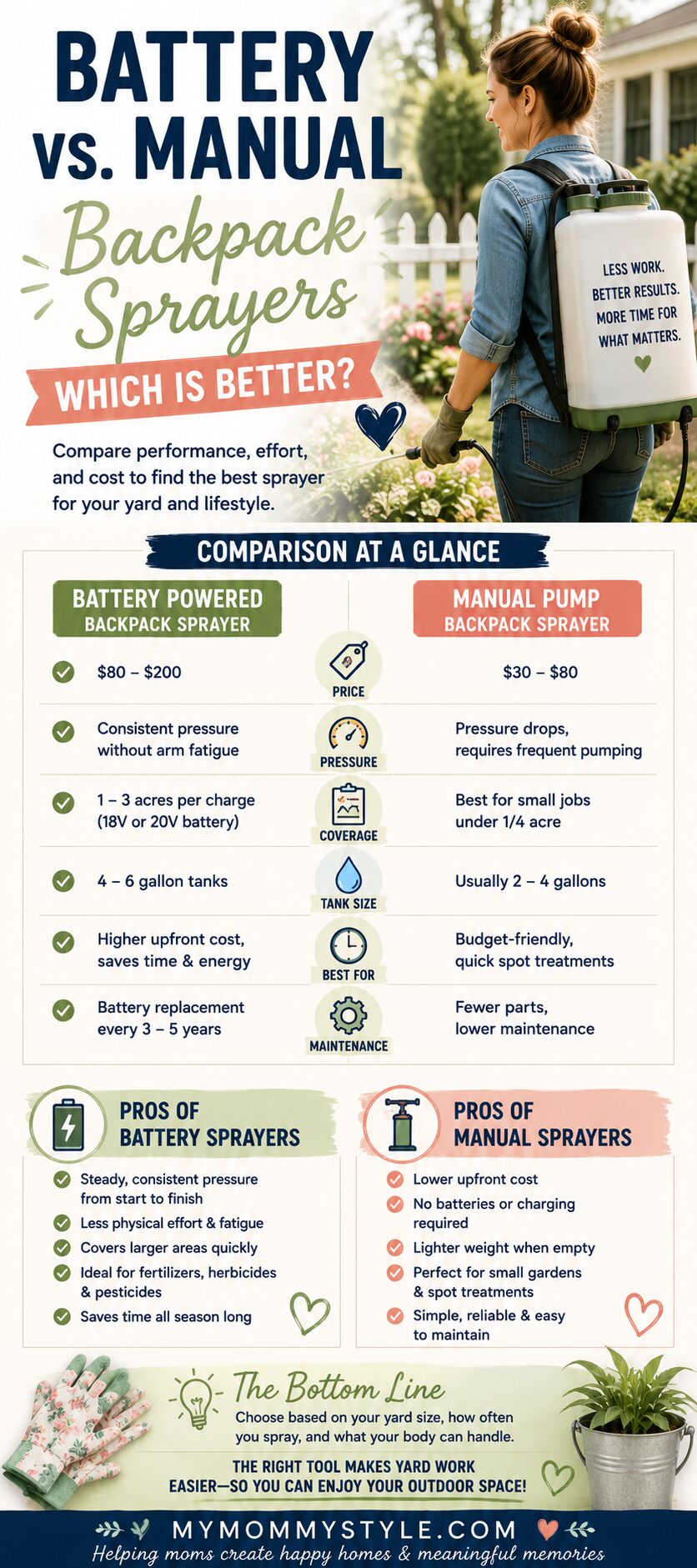
You can shop battery-powered backpack sprayer options across a wide price range. The gap between a motorized unit and a hand pump is way bigger than most buyers expect. Battery models run a motor-powered pump that keeps pressure steady without any work from you; this changes how the whole job feels over a full spray session.
Consistent Pressure Without the Arm Fatigue
A battery-powered backpack sprayer holds pressure automatically. You don’t stop every 30 seconds to re-pump. That steady output means your spray pattern stays even from the first tank to the last, and that matters a lot if you’re applying herbicide or fertilizer where coverage gaps cost you money.
Large properties show the difference right away. Anything above a quarter-acre and manual pumping leads to pressure that keeps dropping, missed spots, and tired shoulders before you’re done.
Runtime, Tank Size, and Practical Limits
Most battery backpack sprayers run on 18V or 20V lithium-ion packs; they’ll handle 1 to 3 acres per charge, depending on your spray rate and nozzle type. Tank sizes typically run between 4 and 6 gallons. That covers most residential or small farm jobs without stopping to refill.
But battery life takes a hit in cold weather. Below 40°F, lithium-ion cells lose capacity noticeably. If you’re spraying in late fall or early spring, you need to plan for that.
Who Gets the Most Out of Battery Models
Battery sprayers work best for anyone covering large areas on a regular basis, or for anyone with joint pain that makes hand pumping difficult. Professional applicators, small-scale farmers, and homeowners with half-acre or larger lots all benefit. The upfront cost runs $80, $200 for a solid unit, but time savings pile up fast over a season.
Manual Pump Sprayers: Simpler, Cheaper, Not Always Worse
Manual backpack sprayers are the older design. They’re not dead weight, though. They work without batteries, without chargers, without a motor to break or maintain. That simplicity has real value in specific situations.
Where Manual Sprayers Still Win
Manual sprayers cost $30, $80, weigh less when empty, and need zero electrical parts. They’re ideal for spot treatments, a few weeds along a fence line, a small garden bed, a single shrub that needs attention. For jobs under 15 minutes, pulling out a battery unit seems silly.
So if the battery is dead and you need to spray right now, a manual pump won’t let you down. No charging time. No delay.
The Physical Reality of Hand Pumping
Hand pumping gets old fast. Every 20 to 30 seconds, you’re re-pressurizing. Over a 45-minute session on a larger yard, that’s hundreds of pump strokes. Your forearm and shoulder feel it the next morning; honestly, most people underestimate how much.
Pressure also drops between strokes, so your spray pattern pulses instead of flowing steadily. For casual use, that’s fine. For precise chemical applications where even coverage matters? That’s a real problem.
Maintenance and Longevity
Manual sprayers have fewer parts to break. No motor, no battery, no charging circuit. The seals and O-rings eventually wear out, but replacement parts cost almost nothing. A well-maintained manual sprayer can last a decade with basic care.
And battery models? They need periodic battery replacement (usually every 3, 5 years with regular use), and motor failures do happen; that said, brands that stand behind their products with clear return policies, the way Vevor does with its 30-day free return policy, reduce the risk of ending up with a broken unit.
Battery-Powered Backpack Sprayers or Manual Pumps: How to Decide
Three things determine the right choice: how much area you cover, how often you spray, and what your body can handle.
Match the Tool to the Job Size
Under a quarter-acre, a manual sprayer finishes the job without the extra expense. Over a quarter-acre, a battery-powered backpack sprayer pays for itself in time and energy saved within a single season. Large properties above an acre, that’s where battery models aren’t just nice to have; they’re the only practical option for solo operators.
Factor In Frequency of Use
Spraying once or twice a year? A $40 manual pump is hard to beat. Spraying weekly through a growing season? Hand fatigue from a manual pump compounds quickly. At weekly frequency, the battery unit’s higher upfront cost spreads across enough uses that it becomes cheaper per use by midsummer.
Consider the Chemical Application Type
Spot treatments don’t care much about pressure inconsistency. But herbicide applications on turf, fungicide on crops, or anything where dosage accuracy matters, those need steady pressure. Battery sprayers deliver that. Manual pumps don’t, not without constant re-pumping between every few steps.
Conclusion
At the end of the day, the best backpack sprayer is the one that makes maintaining your yard easier. If you have a smaller space or only spray occasionally, a manual pump sprayer is a budget-friendly option that gets the job done. But if you’re caring for a larger property or simply want to save time and reduce arm fatigue, a battery-powered backpack sprayer can quickly become one of your favorite outdoor tools.
Choosing the right equipment means spending less time pumping and more time enjoying your yard with your family.
FAQ
Are battery powered backpack sprayers worth the money?
If you regularly spray a medium to large yard, most homeowners find that battery-powered sprayers are well worth the investment. They maintain consistent pressure, reduce arm fatigue, and help finish projects faster.
How long does a battery backpack sprayer last?
Most lithium-ion battery sprayers can cover between one and three acres on a single charge. The battery itself typically lasts three to five years with normal use.
Is a manual backpack sprayer good enough for small yards?
Yes. Manual sprayers work well for spot treatments, gardens, flower beds, and small lawns where spraying only takes a few minutes.
Which backpack sprayer gives the most even coverage?
Battery-powered backpack sprayers provide more consistent pressure, resulting in a more even spray pattern that’s ideal for fertilizers, herbicides, and pesticides.
Do battery backpack sprayers require much maintenance?
Not much. Simply rinse the tank after each use, store the battery properly, and inspect hoses and nozzles periodically to keep the sprayer working efficiently.
Can I use the same sprayer for different chemicals?
Yes, but it’s best to thoroughly clean the tank, hose, and nozzle after every use. Many homeowners even keep separate sprayers for herbicides and fertilizers to prevent cross-contamination.
Hello! I am Camille, a wife, mother of four, Disney obsessed, certified teacher, and believer in creating your best momlife the way you see fit. Motherhood comes with its ups and downs, my hope is you’ll find something here to make your life a little better/easier. Let’s be friends on social!