
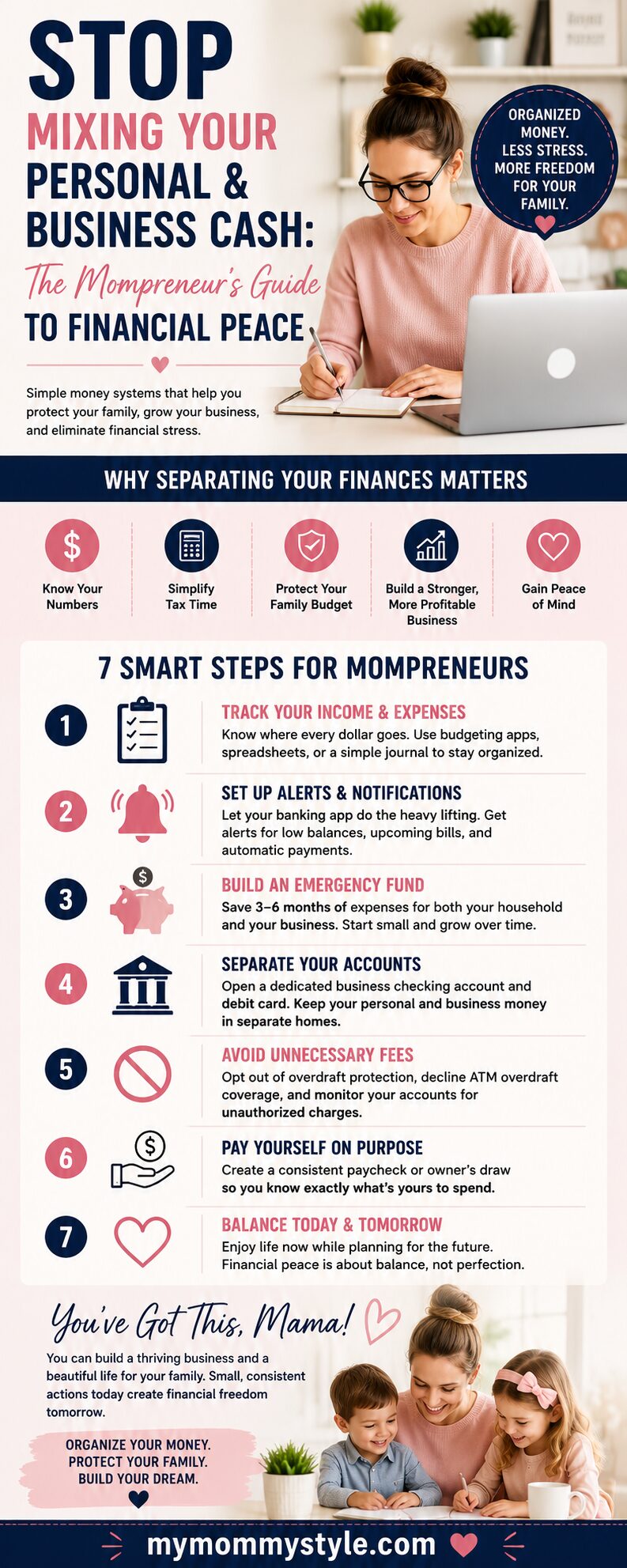
Starting a side hustle, freelance business, or small shop is one of the most exciting things a busy mom can do. Whether you are selling handmade crafts on Etsy, consulting while the kids are napping, or building a full-scale brand, stepping into entrepreneurship is empowering.
However, in the rush of getting a business off the ground, many moms make one critical, stress-inducing mistake: mixing personal and business cash. When your client payments land in the same account you use to buy groceries, and your business software subscriptions draft from the same place you pay for soccer camp, financial chaos is right around the corner. Keeping your cash flexible and structured is the key to avoiding the dreaded overdraft nightmare, so let’s break down exactly how to organize your money, protect your family’s budget, and give your business room to grow.
.jpg)
The Importance of Keeping Cash Flexible
When you run a business, cash flow isn’t always perfectly predictable. Some months are booming; other months require upfront investments in inventory or tools. If your family’s grocery money is tied up in that volatile cycle, it creates immense psychological stress.
Keeping your cash flexible means setting up clear boundaries so you always know exactly what money belongs to your household and what belongs to your business. By implementing a few simple organizational strategies, you can completely eliminate the anxiety of accidentally overdrawing your accounts or hurting your family’s financial stability.
Track Your Expenses Comfortably
The foundation of separating your funds is knowing exactly where every single dollar goes. You cannot manage what you do not measure.
• Use budgeting tools or apps: You don’t need a degree in accounting. Simple, user-friendly apps can connect to your accounts and automatically categorize your expenses.
• Keep a spending journal: If you are a visual person, keeping a small notebook on your desk to jot down business expenses can prevent those “wait, what was that charge?” moments at the end of the month.
• Review your bank statements regularly: Make it a habit to look over your statements at least once a week. This keeps your budget fresh in your mind and helps you spot trends before they become problems.
Set Up Alerts and Notifications
As a busy mom, you have a million things running through your head. You shouldn’t have to manually check your bank balance every single day just to make sure you’re safe, so let technology do the heavy lifting.
Receive alerts for low balances: Set your banking app to send a text or push notification the moment your account drops below a certain threshold, such as $100.
Set up notifications for upcoming bills: Never get caught off guard by a quarterly software renewal or an annual business insurance premium.
Monitor automatic bill payments: Automation is a lifesaver for busy schedules, but make sure you know exactly when those automated drafts hit your account so your funds are ready.
Build an Emergency Fund
The ultimate shield against financial anxiety is a safety net, and this is true for both your household finances and your growing business.
Save a portion of your income regularly: Even if it’s just 5% or 10% of what your side hustle makes, route it directly into savings before you spend a dime.
Aim for at least 3 to 6 months’ worth of expenses: Having this cushion means that if your business hits a slow month, you can still easily cover your fixed costs without dipping into the family grocery budget.
Use high-yield savings accounts for better returns: Don’t let your emergency fund sit stagnant. Put it in an account where it can earn a bit of interest while staying entirely safe.
Separate Your Accounts Safely
The easiest way to stop mixing your personal and business cash is to give your business its very own home. Think of it as drawing a clean line between two worlds that should never overlap: on one side, your household spending; on the other, every tool, subscription, and stock purchase that keeps your business running. Fortunately, you don’t even have to change out of your sweatpants or haul the kids to a physical bank branch to do this.
Modern digital banking makes it incredibly simple to open a debit card online tied to a brand-new, independent checking account dedicated strictly to your business income and expenses. It takes less than ten minutes to set up. Once you have that dedicated account and separate card, you can use it exclusively for business purchases, instantly drawing a clean, stress-free boundary between your personal life and your professional dreams.
If your business account ever runs tight, you can easily link your personal savings account to act as a backup, or look into standard overdraft protection plans with your bank to ensure an important business payment never bounces.
Avoid Unnecessary Fees
Once your separate accounts are up and running, your goal should be to keep as much of your hard-earned money in your pocket as possible by avoiding bank penalties.
• Opt out of overdraft protection if you prefer not to incur fees: Some banks charge high fees every time they “cover” a transaction. If you opt out, the card will simply decline if the funds aren’t there, which can sometimes be a safer boundary for a tight budget.
• Decline overdraft coverage for ATM withdrawals: Avoid paying a $35 fee just to pull cash out of an ATM.
• Monitor your account for any unauthorized charges: Small, fraudulent charges can quietly drain a business account, so catching them early protects your bottom line.
Why This Matters More Than You Think
Many moms start businesses as passion projects or side hustles. In the beginning, it can feel easier to simply deposit payments into your personal checking account and move on. However, as your business grows, those small shortcuts can create major headaches. Having a clear separation between personal and business finances makes tax season easier, provides a clearer picture of profitability, and helps you make smarter business decisions.
Tax Time Becomes So Much Easier
One of the biggest benefits of separating your accounts is simplifying tax preparation. Instead of sorting through months of personal purchases to find business expenses, you’ll already have a clean record of transactions.
Whether you work with an accountant or file taxes yourself, having organized records can save hours of frustration and potentially reduce costly mistakes. It’s one of those systems that takes just a few minutes to set up but pays dividends year after year.
Build Confidence as a CEO
One thing I often tell the women I coach is this: when you start treating your business like a real business, you begin thinking like a CEO.
Opening a dedicated business account may seem like a small step, but it’s often a mindset shift. It signals that your business matters. It deserves systems, structure, and intentional management. That confidence often spills over into marketing, sales, hiring support, and setting bigger goals.
Know Your Numbers Without Guessing
Have you ever wondered whether your business is actually making money? When personal and business expenses are mixed together, it becomes nearly impossible to answer that question accurately.
A separate business account allows you to quickly see:
- Monthly revenue
- Monthly expenses
- Profit margins
- Seasonal trends
- Areas where you may be overspending
Knowing your numbers helps you make decisions from a place of confidence rather than emotion.
When It’s Time to Hire Help
Many entrepreneurs reach a point where they need support, whether that’s a virtual assistant, bookkeeper, social media manager, or accountant.
Having organized finances makes it much easier to delegate tasks and bring team members on board. If someone else is helping manage your books or expenses, they’ll thank you for keeping everything separate from your family’s grocery budget and Target runs.
FAQ Section
Frequently Asked Questions About Separating Business and Personal Finances
Do I need a separate bank account for a side hustle?
While it may not be legally required for every business structure, having a separate account is highly recommended. It helps you track income and expenses, stay organized, and simplify tax preparation.
When should I open a business bank account?
Ideally, as soon as you start earning income. Even if your business is brand new, establishing good financial habits early can save significant time and stress later.
Can I use my personal account for business expenses?
Technically, many small business owners start this way. However, it quickly becomes difficult to track expenses, monitor profits, and prepare for taxes.
How much money should I keep in a business emergency fund?
A good goal is three to six months of business operating expenses. This can help cover software subscriptions, contractors, inventory, or slow revenue periods.
Should I pay myself from my business account?
Yes. Many business owners create a regular owner’s draw or paycheck system. This helps maintain clear boundaries between personal and business finances.
What if my business income is inconsistent?
Separate accounts become even more important when income fluctuates. You’ll have a clearer understanding of cash flow and be better prepared during slower months.
Do I need accounting software?
Not necessarily in the beginning. Many moms start with spreadsheets or budgeting apps. As your business grows, software like QuickBooks or Wave can make bookkeeping much easier.
Growing a business while managing a household is an incredible achievement, but it shouldn’t come with financial whiplash. By taking a few steps to track your expenses, setting up smart digital alerts, building a modest cushion, and taking a few minutes to establish separate accounts, you can eliminate overdrawing errors entirely. Stop mixing your cash today; your peace of mind and your accountant at tax time will both thank you.
Want support building systems in your business and life?
Visit CamilleWalker.co for coaching opportunities and help one on one! You can also listen to podcast episodes that share stories of women building businesses at Call Me CEO Podcast.
.jpg)
Hello! I am Camille, a wife, mother of four, Disney obsessed, certified teacher, and believer in creating your best momlife the way you see fit. Motherhood comes with its ups and downs, my hope is you’ll find something here to make your life a little better/easier. Let’s be friends on social!