
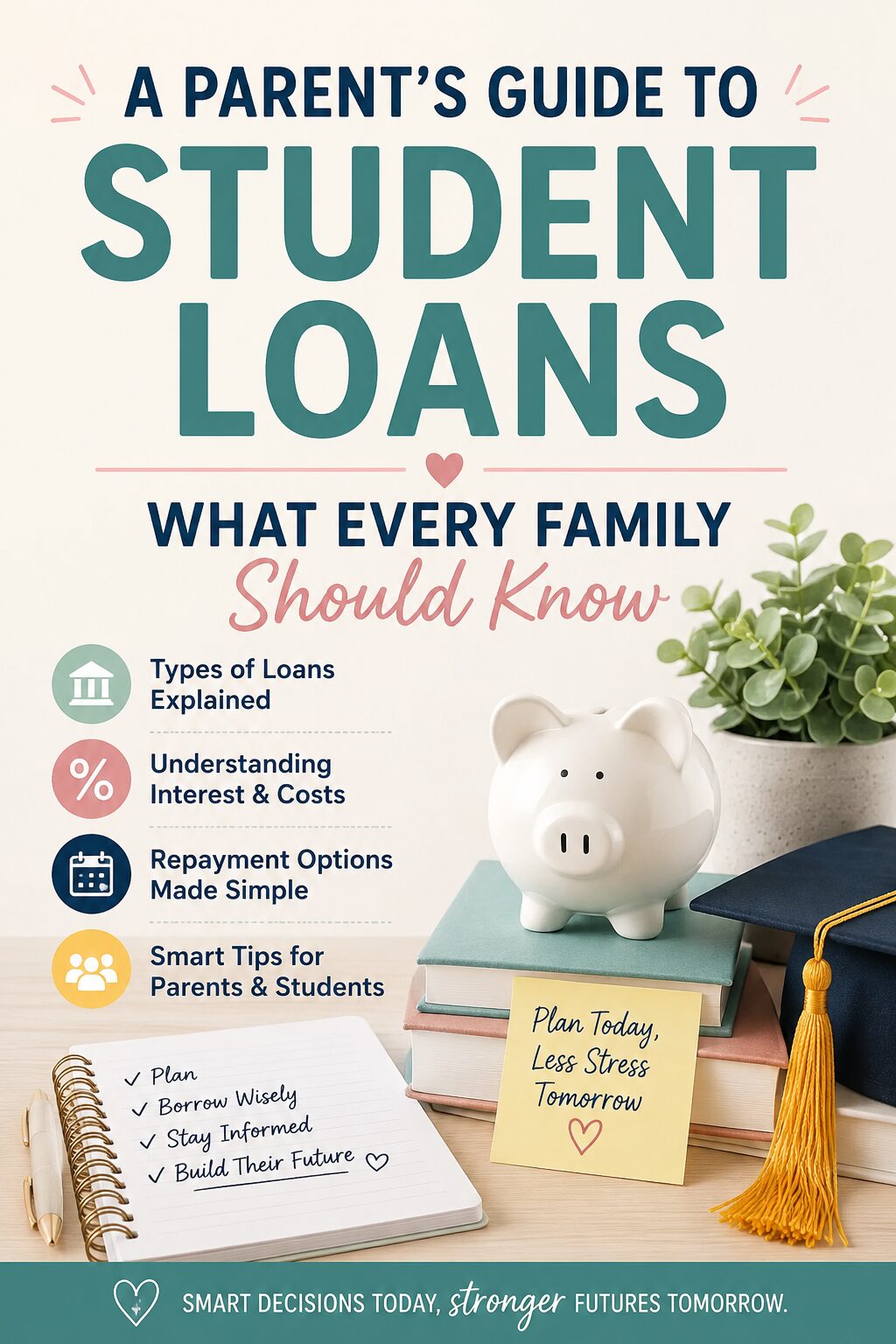
For many families, student loans are a necessary part of paying for higher education. But if you’re a parent, the process can feel confusing and even overwhelming. Between different loan types, interest rates, and repayment options, it’s easy to feel unsure about what decisions are best for your child and your family. Understanding student loans doesn’t have to be complicated.
.jpg)
In this post, we break down student loans in a simple, parent-friendly way so you can feel more confident navigating the process together. From federal vs. private loans to repayment strategies and avoiding common mistakes, these small decisions today can make a lasting impact tomorrow.
#StudentLoans #ParentingTeens #CollegePlanning #FamilyFinances #MoneyTipsForParents #FinancialLiteracy #CollegeBound #ParentingSupport #MyMommyStyle
The good news is that student loans don’t have to be complicated. With a clear understanding of how they work, you can approach them with confidence and help your child make smarter financial choices.
Understanding Student Loans: What Are Student Loans and How Do They Work?
At their core, student loans are borrowed money used to pay for college expenses such as tuition, housing, and books. Like any loan, they must be repaid over time, usually with interest.
Interest is what the lender charges for borrowing money. This means that the total amount repaid is typically higher than the amount originally borrowed. Understanding this basic concept is key because it highlights why borrowing matters and how to do so carefully.
Student loans are not just about covering costs today. They are long-term financial commitments that can affect your child’s future for years after graduation.
Types of Student Loans Parents Should Know
There are two main types of student loans: federal and private. Federal loans are offered by the government and tend to have more flexible terms and borrower protections. Private loans are offered by banks or other financial institutions and often depend on credit scores and financial history.
Federal loans typically include options like income-based repayment plans and temporary relief if financial hardship arises. Private loans, while sometimes necessary, usually do not offer the same level of flexibility.
Parents may also come across Parent PLUS loans, which are federal loans taken out in the parent’s name to help cover education costs. These can be helpful, but they also place the responsibility for repayment directly on the parent.
Understanding Interest Rates and Long-Term Costs
One of the most important aspects of student loans is the interest rate. This determines how much extra will be paid over time.
Some loans have fixed interest rates, which stay the same throughout the life of the loan. Others have variable rates, which can change over time. While a lower rate may seem appealing at first, it’s important to look at the total cost of the loan, not just the monthly payment.
A lower monthly payment might feel easier in the short term, but it can sometimes lead to paying more overall if the repayment period is extended. Taking the time to understand how interest works can help families make more informed borrowing decisions.
What Determines How Much Your Child Can Borrow
The amount a student can borrow depends on several factors, including the cost of the school, financial aid received, and whether the loans are federal or private.
It can be tempting to borrow the maximum amount offered, but that is not always the best choice. Encouraging your child to borrow only what is truly necessary can help reduce financial pressure after graduation.
Thinking ahead about future income is also important. A realistic view of what your child might earn after college can help guide how much debt is manageable.
Repayment Options Explained Simply
Repayment usually begins after a grace period, a set period after graduation during which payments are not required. For many federal loans, this period lasts about six months.
There are different repayment plans available, especially for federal loans. Some offer fixed monthly payments, while others adjust payments based on income. This flexibility can be helpful if your child’s financial situation changes.
Understanding these options early can make the transition from school to repayment much smoother.
Planning Ahead as a Family
Student loans are not just a student’s decision. They affect the entire family. That is why open communication is so important.
Before taking out loans, it’s helpful to discuss expectations. Who will be responsible for repayment? How much debt is considered reasonable? What are the long-term goals?
Creating a basic financial plan together can prevent confusion later. Even a simple conversation can make a big difference in how loans are managed over time.
Understanding Future Financial Impacts
Student loans can influence many aspects of your child’s financial future. They can affect credit scores, the ability to save, and even major life decisions like buying a home.
Looking ahead, it can also be helpful to understand how different factors may shape repayment options down the line. For example, being aware of trends like student loan refinance rates can give families a broader understanding of how borrowing costs might change in the future. Even if refinancing is not something you are considering right away, having this awareness helps you stay informed and prepared.
The goal is not to predict every outcome, but to build a general understanding of how today’s decisions may impact tomorrow.
Common Mistakes Parents Should Avoid
One of the most common mistakes is borrowing more than necessary. It’s easy to focus on immediate needs without fully considering long-term consequences.
Another issue is not fully understanding loan terms before agreeing to them. Taking the time to read and ask questions can prevent surprises later.
Finally, some families overlook how interest builds over time, especially while the student is still in school. Being aware of this can help you make smarter choices about how and when to borrow.
Helping Your Student Build Financial Responsibility
Student loans can also be an opportunity to teach valuable financial lessons. Helping your child understand budgeting, saving, and responsible borrowing can prepare them for life beyond college.
Encouraging part-time work or small financial contributions can build a sense of responsibility. At the same time, offering guidance and support ensures they are not navigating these decisions alone.
The goal is to create a balance between independence and support.
Resources and Tools for Parents
There are many tools available to help families better understand student loans. Government websites provide reliable information about federal loan programs, while financial aid offices can answer specific questions about your child’s situation.
Loan calculators can also be useful for estimating monthly payments and total repayment costs. These tools can turn abstract numbers into something more concrete and easier to understand.
Conclusion
Student loans can feel complicated, but they don’t have to be overwhelming. With the right information and a thoughtful approach, parents can play an important role in guiding their children through the process.
By understanding how loans work, communicating openly, and planning ahead, you can help set your child up for a more stable financial future. Small, informed decisions today can make a lasting difference for years to come.
Hello! I am Camille, a wife, mother of four, Disney obsessed, certified teacher, and believer in creating your best momlife the way you see fit. Motherhood comes with its ups and downs, my hope is you’ll find something here to make your life a little better/easier. Let’s be friends on social!